Highlander: The Search for Vengeance
Q & A with Galen Walker

 After a decade as a studio and touring lead guitarist with top acts including Kingdom Come, The Runaways and Cellmates, Galen Walker established himself as a sound designer and post-production sound supervisor, working on films such as Sofia Coppola's The Virgin Suicides and Blind Horizon, starring Val Kilmer.
He set up his own independent post-production sound company and subsequently developed a joint venture known as Pacifica Media Affiliates (PMA), consisting of five Hollywood sound studio facilities. Following the successful acquisition of PMA by Technicolor, Walker joined Imagi USA in 2004.
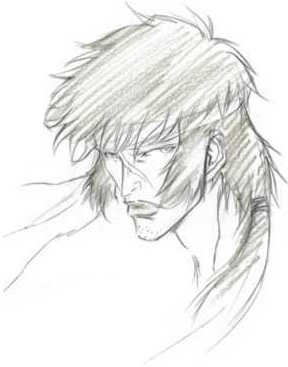
Walker was a producer of Highlander: The Search for Vengeance, from Imagi and Davis-Panzer Productions, in which acclaimed anime director Yoshiaki Kawajiri brings his distinctive visual bravura to the immortal "Highlander" franchise. Highlander: The Search for Vengeance was released June 5, 2007 in the U.S. by Starz Home Entertainment / Manga.
Walker's production credits also include Imagi's TMNT, released in March 2007.


1. Are you a fan of Japanese anime? What is your favorite anime?
I've become a fan of anime. A few of my favorites are Metropolis, The Animatrix and Millennium Actress. And, of course, I really love Ninja Scroll.
2. How was it working with the architects of the "Highlander" franchise, Peter Davis and the late Bill Panzer?
Peter and Bill each brought vast experience and talent to the table. On the creative side, I worked closely with Bill and found his creative intuition very inspiring. Bill's death was a terrible loss, and he will be missed. Making another Highlander movie just won't be the same without him. There can be only one.
3. What was the single most memorable aspect of working with anime director Yoshiaki Kawajiri?
Most of all, learning how Kawajiri-san looked at a film in its totality, and not scene by scene.
4. How did the idea of combining the anime style with the "Highlander" franchise come about?
We wanted to take a known Western franchise and interpret it through an anime style. Highlander was a great fit due to the character content, as well as the fact that Kawajiri-san was a great fan of the property.
5. What was the writing process like for "Highlander" guru David Abramowitz?
David once expressed that his experience writing for Highlander had dealt with going into the past. For this film, he could write a script that started in the future. Through animation, we could do just about anything he could think of – sets, people and time. Anything was possible. And he was very excited by this. Being the guru of the Highlander lore, he was able to bring the essence of this franchise into the story
6. Does this film follow the previous live-action movies or is it a unique story?
Our film and the earlier Highlander movies share the actual lore and boundaries of the franchise. We created a unique story which is really a love story tragically contaminated by vengeance.
7. What were some of the challenges in bringing together two different cultures (American and Japanese) to create a film?
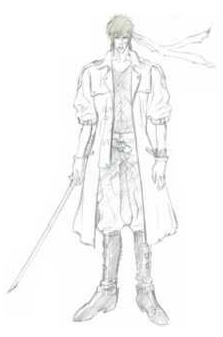
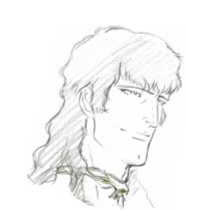
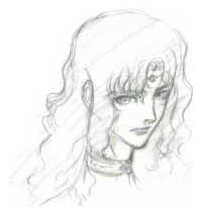
The main one, of course, was the storytelling process. Constructing a traditional three-act story and adapting it to an anime film wasn't very easy. Then, a hero in Japanese culture – like the samurai – is filled with honor and does little talking. Sarcasm in general is hard to translate into Japanese. Another challenge that we encountered was in character design. But, the challenges were ultimately learning experiences, and Kawajiri-san and Madhouse proved to be amazing. I'm really happy to have had the opportunity to learn from them.
8. The score was a collaboration between composer Nathan Wang and sound designer Jussi Tegelman. How did they work to fuse their styles together?
This situation worked out brilliantly. Their different styles meshed together extremely well. Kawajiri-san set the tone, and I worked with him to develop a strong temp score from which Nathan and Jussi built the structure of their score. Jussi, being very percussion-oriented, and Nathan, having a classical piano background, created a very interesting score that captured the tone and style of the film.
9. What roles did animation veterans Kevin Eastman and Joe Pearson play in the process?
Their comments and input during the story reel process were especially helpful for the American team. They worked closely with David Abramowitz to help him gear his script toward an animated film style. Kevin and Joe have had such an extensive background in animation. All of their creative contributions were very much welcomed.
10. What connections does the "Highlander" anime make to either the original movies or TV show? Were there any voice cameos?
Actually, in the beginning it was our intention to use many of the actors from the Highlander television series for the voices. Throughout the creative process the only original Highlander actor that made it to the final cut was Jim Byrnes. Also, we wanted the music to be in the same style that Queen had set for the original film. By utilizing heavy rock & roll guitar as well as drums, we kept that feel intact and consistent with the Queen tone.
11. Why do you think the "Highlander" franchise has been popular for so long in
so many different forms?
Highlander is such a great fantasy concept, that immortals lived throughout known periods of history and the kinds of adventures you could have if you wouldn't die. It has longevity because you can go so many places with it, and it isn't constrained by time.
12. How good is your Japanese?
It's awesome... because I have a great translator.
Click to explore the world of Highlander: The Search of Vengeance
